Pexophagy in cellular homeostasis, aging and disease
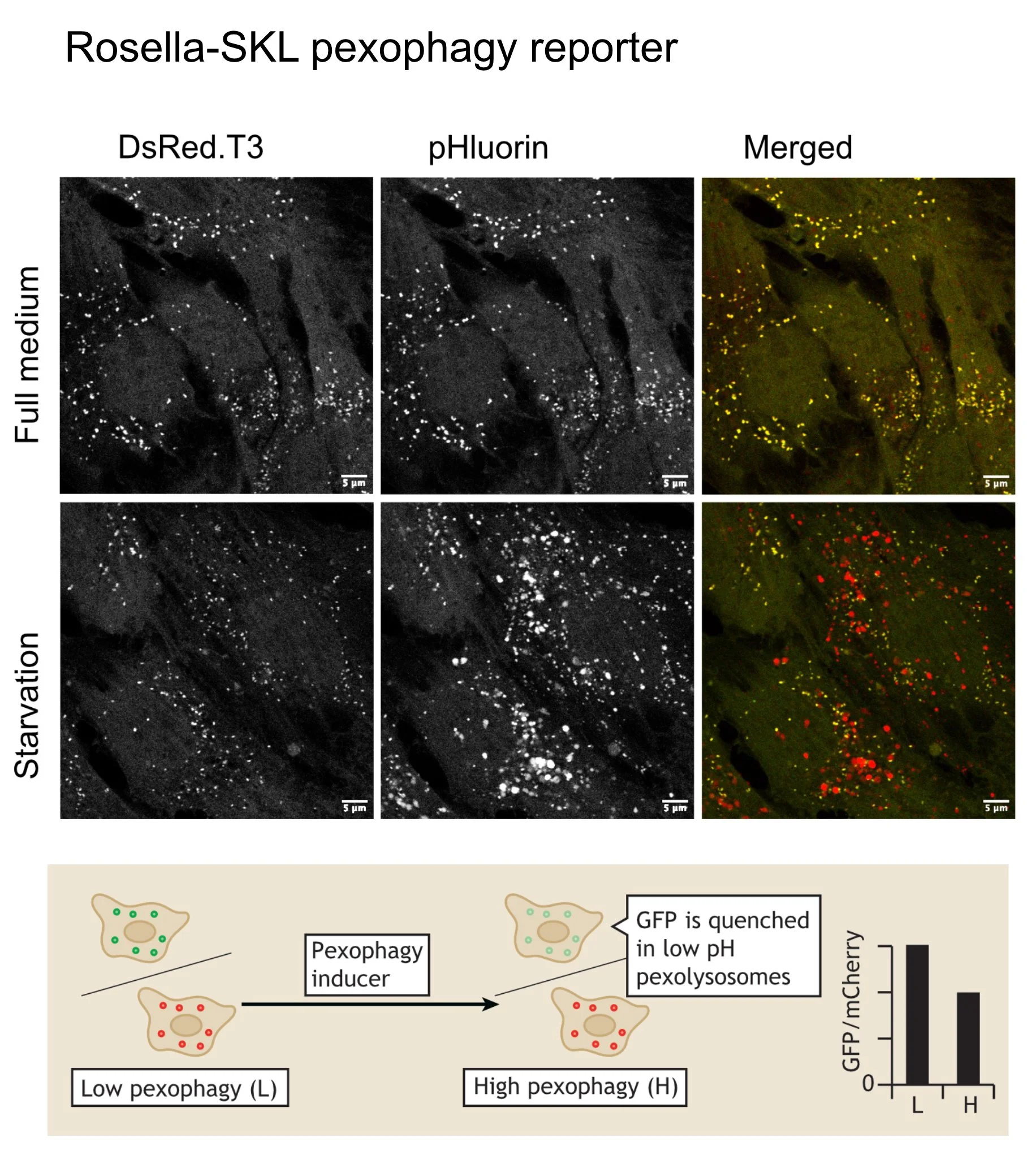
As part of the SFB 1177 “Molecular & Functional Characterization of Selective Autophagy”, we study how peroxisomes are maintained and removed by selective autophagy (pexophagy) and how peroxisomal quality control contributes to cellular homeostasis, aging, and disease.
Our work focuses on ubiquitin-dependent regulation of peroxisome turnover, with particular interest in deubiquitylating enzymes (DUBs) and the ubiquitin signals that control pexophagy. Using genetic screens and advanced imaging approaches, we identified USP47 as a previously unrecognized regulator of peroxisome homeostasis in both human cells and C. elegans. Loss of USP47 triggers pexophagy under basal conditions, and our data point to a role for USP47 in regulating key factors involved in peroxisome biogenesis and turnover.

Mitophagy & PINK1 regulation
Mitophagy, the selective removal of damaged mitochondria by autophagy, is essential for maintaining mitochondrial function and cellular health. Defects in mitochondrial quality control are linked to neurodegenerative diseases and other pathological conditions. Our research explores how ubiquitin signaling pathways regulate mitophagy and how DUBs fine-tune this process by counteracting ubiquitin-dependent signals.
Currently, we are investigating novel regulatory mechanisms that govern PINK1 processing and activity during mitochondrial stress, with particular interest in how these pathways shape mitophagy, organelle homeostasis, and cell-type–specific functions.